

Surveillance selfies, Flock cameras, bots
Some work from July

There was a sort of treacly introduction about my love of summertime and how much I hate that August reminds me every year that time moves in one unrelenting direction, but honestly it’s raining, my family is in town, and I’m writing this before we trek up to the American Museum of Natural History with my nieces and nephews to show them dinosaurs and sarcophagi and butterflies, etc.
July was busy. A few hanging freelancing pieces that were commissioned before I started at CNN were published, which brings me ever closer to being a one-outlet man for the first time. The month also felt oddly thematic with what I wrote about which as a generalist is always a little weird. But I do think all these pieces are starting to circle my general beat of “why the internet drives everyone insane” which I guess is good.
How Bots Took Over Our Lives for The New Yorker
I wrote the bulk of this piece earlier this year as terms like “agentic” were going wild and people were building little OpenClaw bots to do weird shit for them.
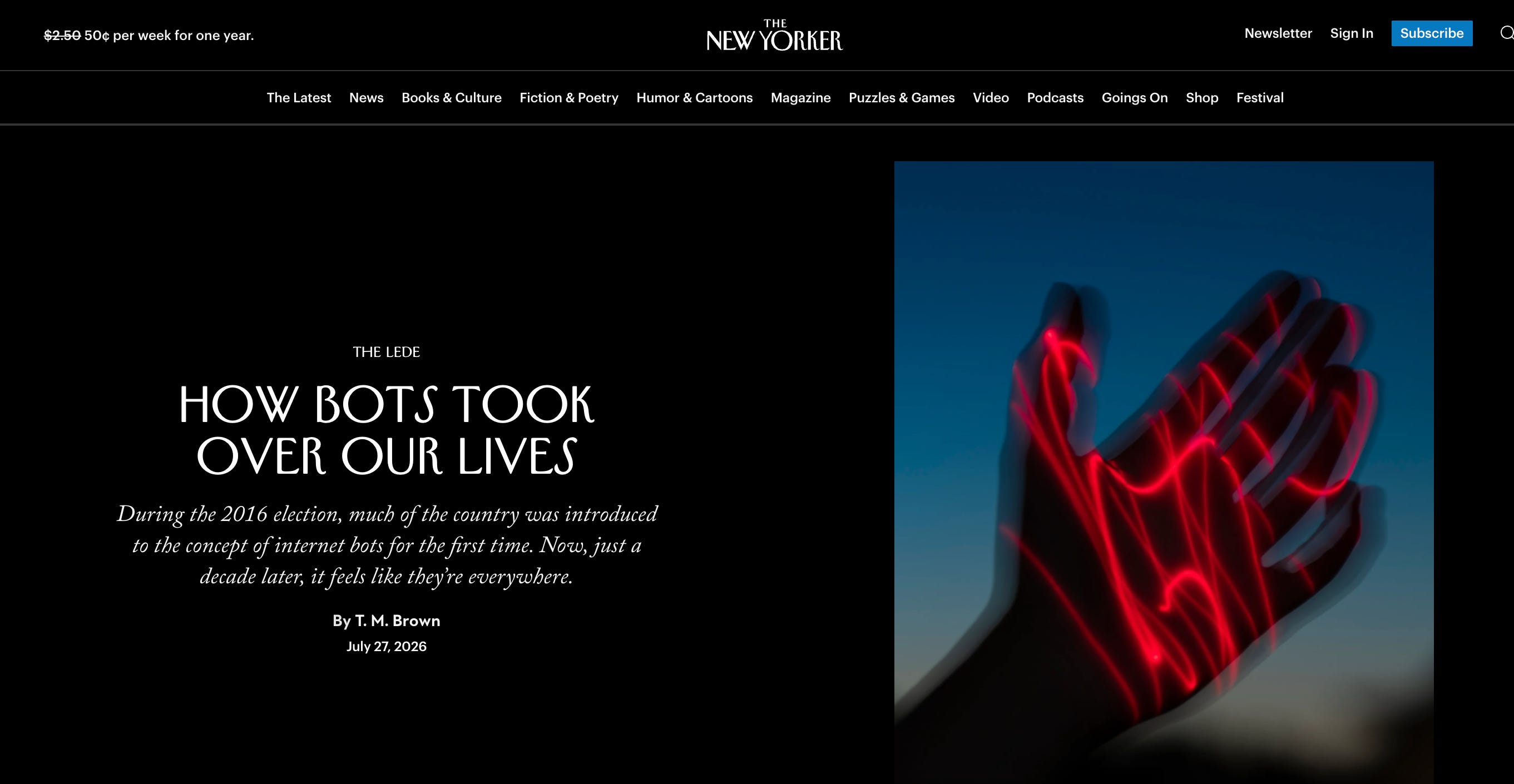
The internet is becoming less human which, in some ways, is totally fine because I would rather spend less time being bombarded with the inner thoughts of several billion people simultaneously. Where it gets very dark, though, is when people don’t understand they’re interacting mostly with machines. Everyone walks around with this ambient psychosis machine in their pocket now, and botified social media amplifies those little disembodied voices.
It doesn’t help that people struggle to decipher bots from humans in the first place during political conversations. The default heat setting for political discourse online is already so high that it tends to pressurize such conversations into a single, highly combustible layer. Bots that are designed to inflame those political disagreements are trained on those conversations and then injected back into the discourse, amplifying the feedback loop of people yelling at bots who are yelling at people, and so on.
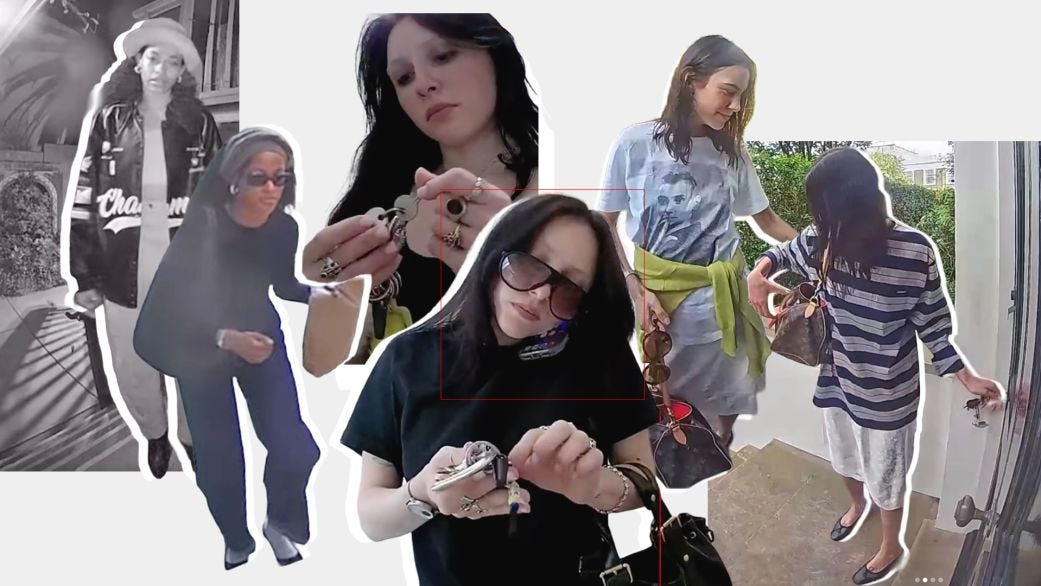
Since the camera is always watching, why not snap a surveillance selfie?
I enjoy writing pieces like this because I get to talk to policy experts, artists, and regular people about their view into a common topic. “Surveillance” as aesthetic isn’t a remotely new trend even though it seems like Alexa Chung invented it with her Ring doorbell selfies, but I do think she ignited a newer conversation around the mobility of monitoring and how people engage with it. I got to talk a bit to Julia Scher, who has been using surveillance as a medium in her art for decades and I find that half the time artists have significantly clearer things to say than anyone else.
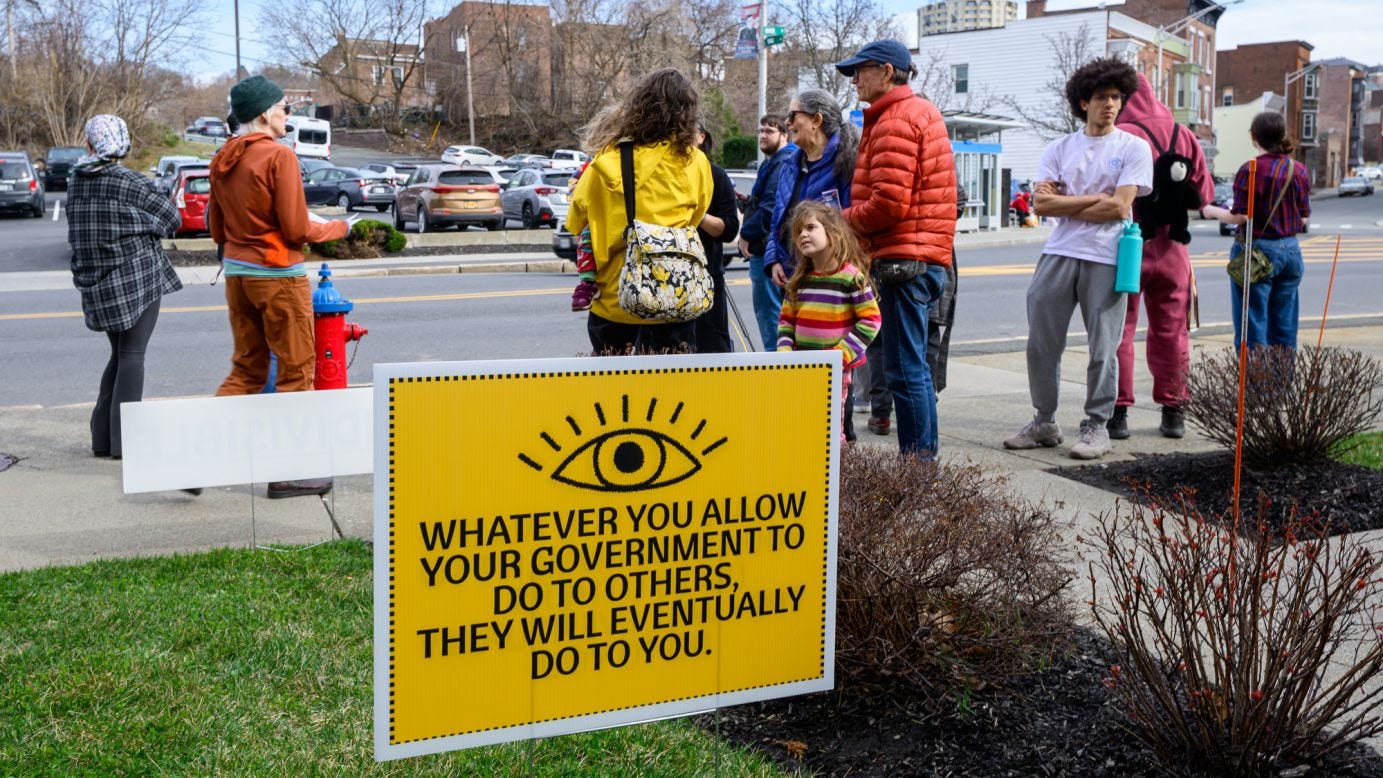
Flock cameras are getting mobbed
Flock Security cameras have been all over the news lately, but I noticed that a dislike of the technology was common across the political spectrum and I wanted to figure out why. Oddly, reporting this out also forced me to spend a lot of time back on Facebook and I sort of forgot how popular and widely used the platform still is.
Bot one makes me think of the "dead internet" theory.