

“It’s like a Black Mirror episode”
An investigation into an unregulated crypto bounty marketplace

Hello from the budget basement gym in Cobble Hill I am sadly spending an hour in on a beautiful Saturday. I’ll be watching my Knicks win the chip in a Fort Greene parking lot with a basketball hoop and I am beyond excited.
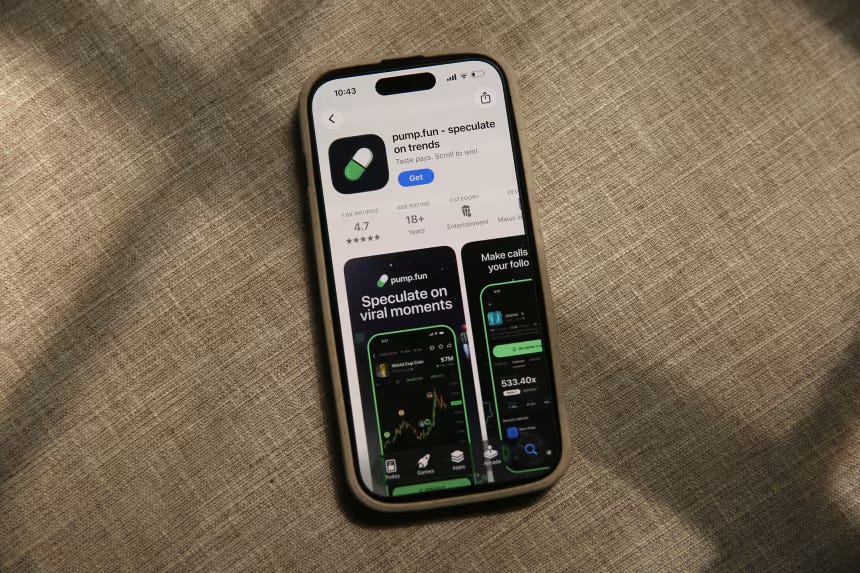
How much would it take to get you to tattoo a random word on your forehead? I spent a lot of time thinking about that question while I investigated Pump.fun, a dodgy crypto trading platform mostly famous for giving people the ability to launch useless meme coins very easily. (It also got into hot water in 2024 for a livestream functionality where it took, like, a few hours for people to start posting extremely disturbing content including animal abuse and self-harm. They shut it down a few months later, but you get the sense the real purpose of Pump.fun is infamy farming.)
About 10 days ago, Pump launched another controversial product: Pump.fun Go, a marketplace where users could post “bounties” payable in cryptocurrency. You can see where this is going. The morning it launched someone posted a suicide bounty, offering $650,000 worth of Solana to someone who submitted video proof they killers themselves. Disregarding the actual mechanics of claiming such a prize, it’s maybe one of the most fucked up things I’ve ever had to report and confirm. Pump quietly removed the bounty, but there are still some disturbing rewards left on the board, including quite a few forehead tattoo offerings. Someone—a man in Chennai allegedly named Arivu—eventually went through with it and the video he recorded of the process went viral. I wanted to talk to everyone involved in this horror show, so I started digging.
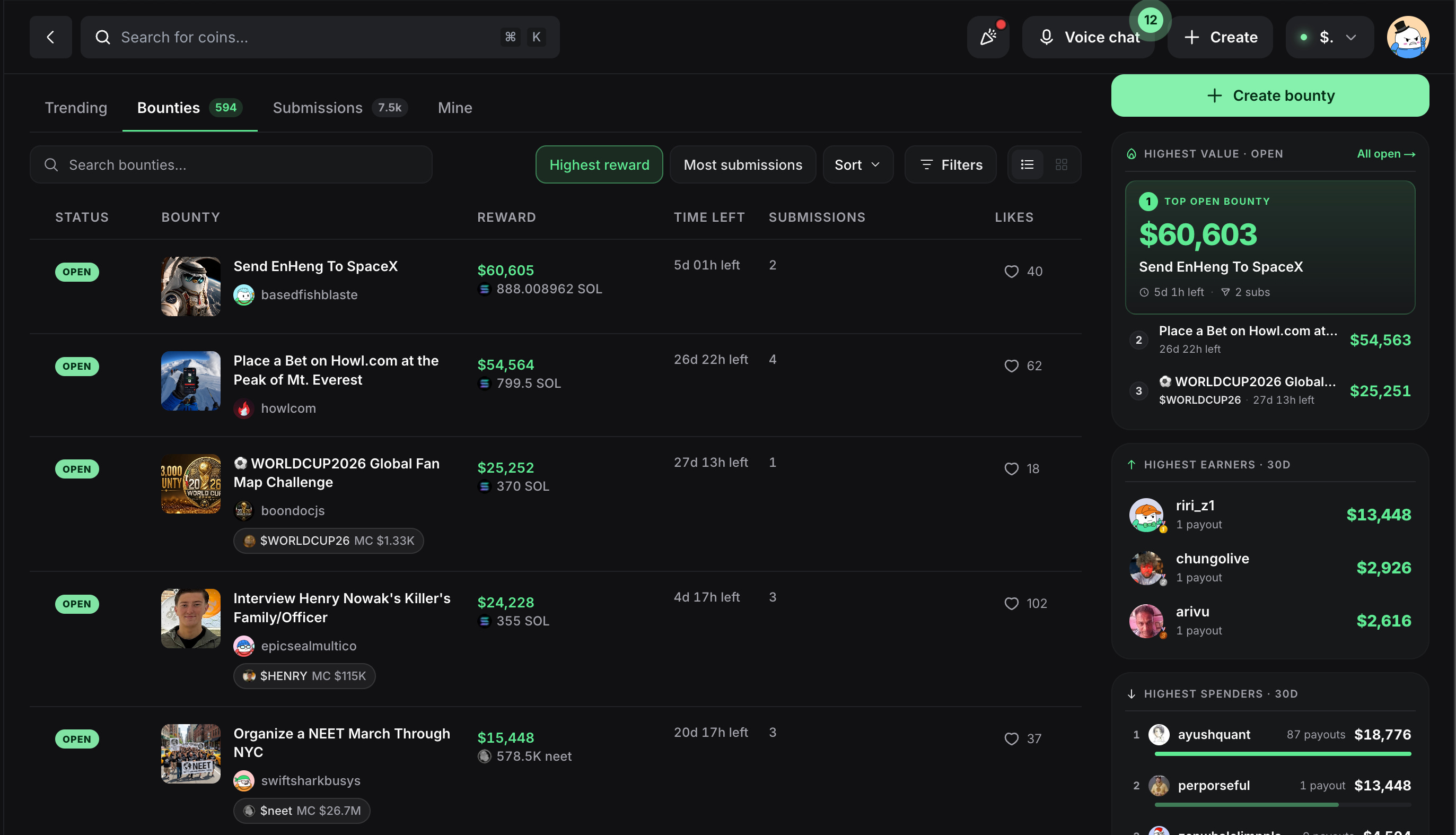
As anyone who has reported on the crypto community can tell you, it is a very hard group of people to crack into. People are willing to talk, but everything is passed through several layers of obscurity and anonymity. No one wanted to be named, but I got lucky that there was enough avarice on one side and regret on the other that I at least had enough proof for my fact checkers. I found the guy who posted the bounty Arivu eventually took up; he was eager to talk because he thought CNN would tweet the name of his meme coin and pump its value. He kept asking if we would post about it, and for the first time in my career I was offered a bribe.
I also called everyone I could find associated with Pump, whose two main co-founders live outside the US. One of them, Aron Cohen, who lives in Israel, ignored emails and phone calls so I rang his lawyer who picked up, said “I can’t talk to you about this,” and hung up.
I never found Arivu as his original post on X led to his account being banned. But the video is still up on a couple of other accounts and I wanted to make sure I exhausted every avenue before I gave up looking. So I kept watching the video looking for clues. I know he was in Tamil Nadu, and the sign outside the parlor said DV Tattoos so I started searching around for shops with that name and found one among the strand of storefronts on the beach in Chennai. I cross referenced it against Google street view and, lo and behold, there it was, DV Tattoos. Same sign, same slightly disturbing ads with what looks sort of like a chadded out Hitler on one board. I looked it up on Instagram and found the owners name and WhatsApp number so I messaged him. This was around 6pm my time, so I figured while it was a long shot, I’d give it the night and wait for him to respond.
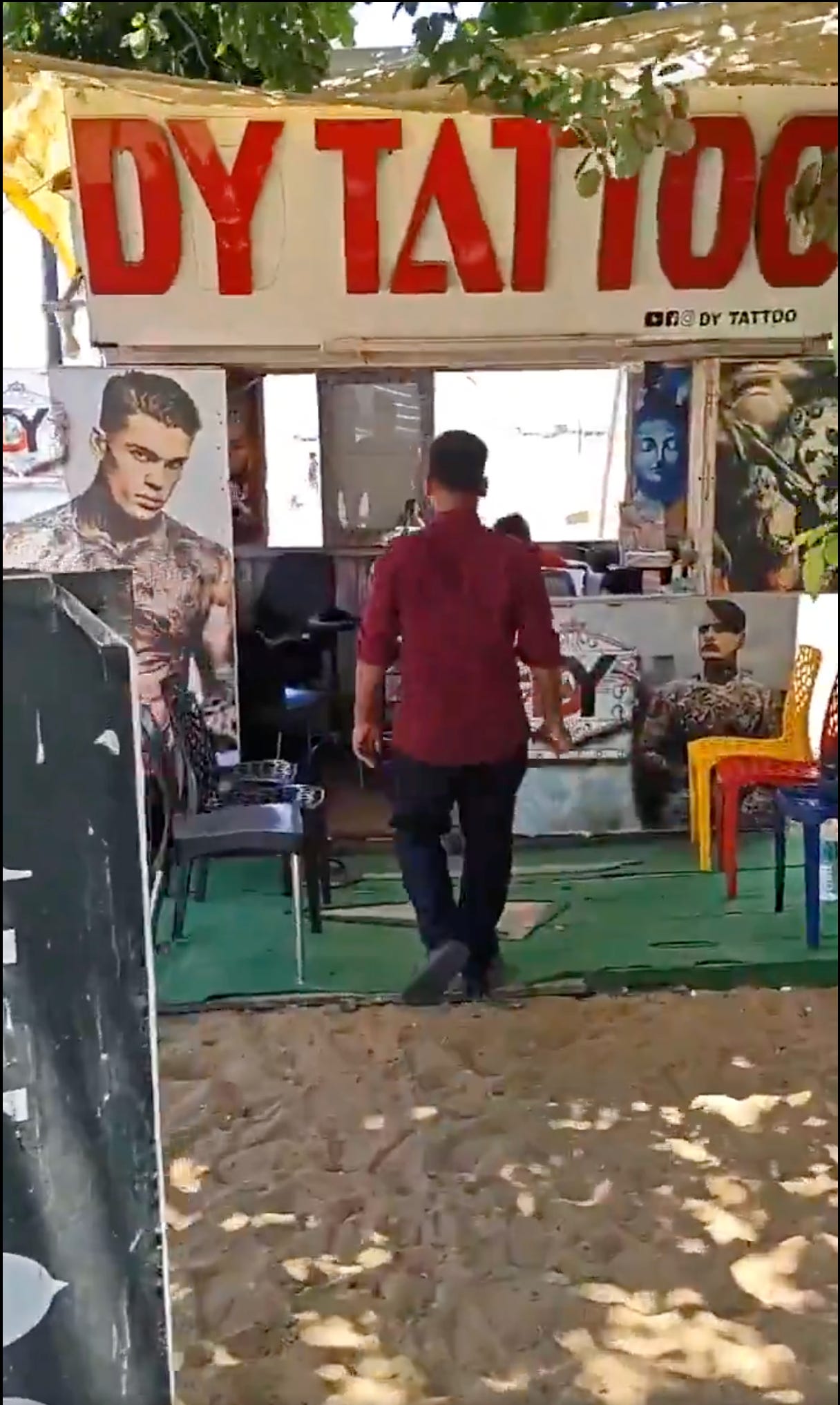
The next morning there was still nothing. I scrambled to find a Tamil translator but figured I should just call him myself. He picked up on the third ring, and quickly told me “no English.” I felt bad but asked if I could text, making sure to offer it slowly. I asked him a couple of straightforward questions: Did he tattoo Arivu? Yes. Was there anyone coercing him into getting the tattoo? No. Did he regret doing it? No.
In talking to my editor about what we needed to round out the story, we settled on the idea of human dignity, specifically one through a theological lens. Pope Leo XIV’s recent encyclical mentions the concept of “dignity“ more than 100 different times. “[T]rue fulfilment is not achieved by eliminating weakness but through harmonious growth. It is found where freedom and responsibility are intertwined with mutual care and true solidarity, and where progress is measured by the dignity of each person and the good of all peoples,” he writes.
We needed a Catholic, then, and several people mentioned the work of William Cavanaugh, a theologian at DePaul university. We chatted for a while about what it means for a person to have dignity in the face of overwhelming inequality and desperation, and what it means to take advantage of those situations. Our conversation was only 15 minutes, but there is such a humanity in a progressive vision—or maybe even a more faithful one—of Christianity that I left our call feeling a few ounces lighter.

The story came out yesterday and I’m proud of my reporting and how we pursued what is a dark side of the internet. I try to approach anyone I write about with a lot of curiosity and sympathy, but I have to say there really is something unconscionably sinister about what kind of person this nihilistic vision of capitalism is starting to breed. Everything is a meme, everything is a video, everything is a livestream. I do wonder, sometimes, how we get convince people that the world outside their screen does indeed exist.
I don’t want to like this 😩